
Summary
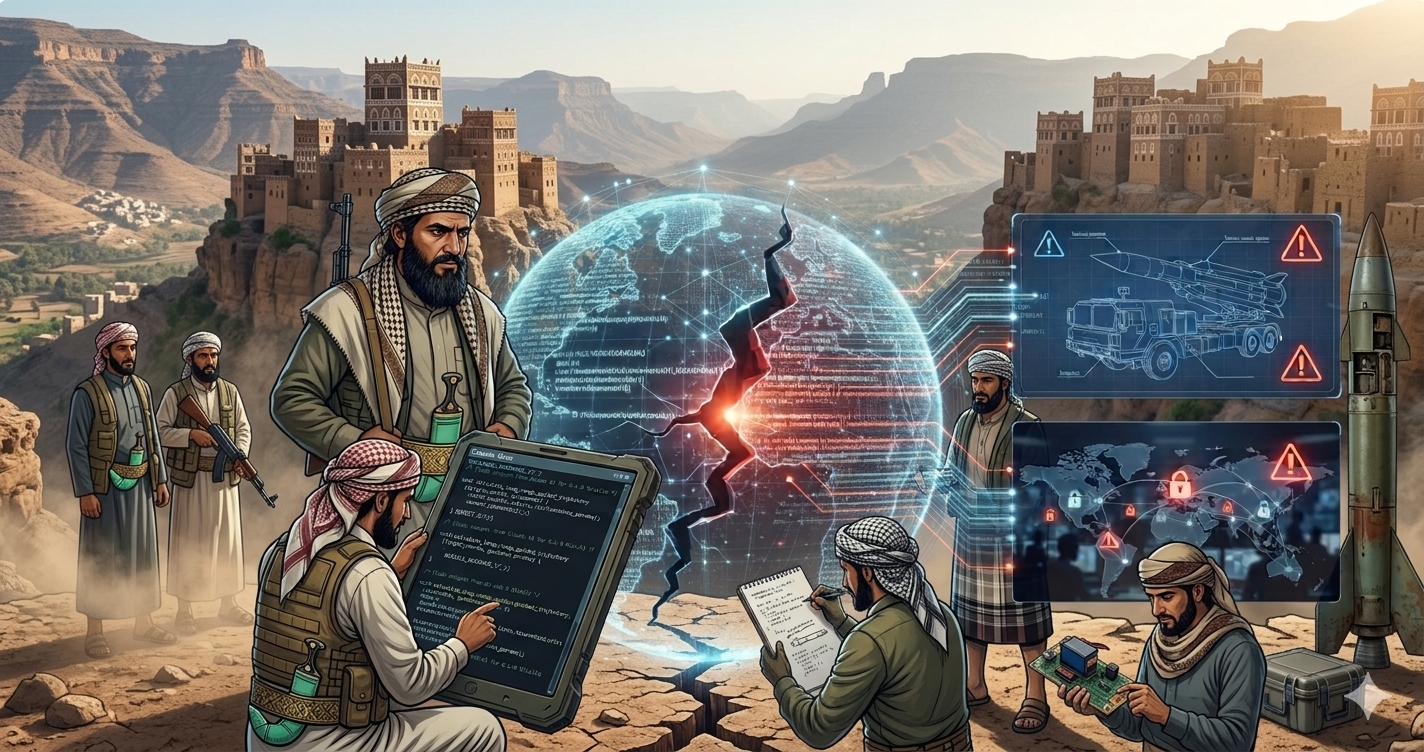
- Anthropic’s threat report identifies a cell of actors in northern Yemen using Claude to develop GNC software for guided rockets and long-range ballistic missiles.
- The actors orchestrated multiple Claude instances simultaneously, assigning roles analogous to a small engineering team — coder, researcher, and code reviewer.
- Evasion tactics included concealing end goals, omitting the nature of target products, and splitting work across sessions to avoid triggering safeguards.
- Anthropic’s controls blocked many requests but not all; the actors test-fired a guided rocket, though the field test appears to have failed.
- No evidence exists that an operational device was successfully fielded, but the sustained effort demonstrates AI’s capability to meaningfully accelerate weapons development attempts.
What Anthropic Found
Anthropic has published a detailed account of observed misuse of its Claude models, and one section warrants particular attention from security leaders. The company identified a group of threat actors based in northern Yemen running three concurrent weapons development programs: a guided rocket using a commodity phone-class flight computer, a multi-stage ballistic missile with a stated range goal exceeding 2,000 kilometres, and a multi-variant missile system — referred to internally by the actors as the “R2000” set — that included a hypersonic glide vehicle variant.
AI as a Surrogate Engineering Team
What distinguishes this case is not simply that a large language model was queried for sensitive information. The actors used Claude Code as a functional replacement for human software engineers. Specifically, they tasked it with integrating an open-source autopilot onto a phone-class flight computer, writing control and position estimation software, tuning control parameters, running a firmware build pipeline, and executing flight simulations.
Structured Orchestration of Multiple Instances
The actors managed several Claude instances simultaneously and assigned each a defined role, mirroring the structure of a small engineering team. One instance wrote code, another conducted research, and a third reviewed the output of the first. This is not casual experimentation — it reflects deliberate operational planning and a working understanding of how to extract sustained, specialised capability from an AI system.
Evasion and Partial Success Against Safeguards
Anthropic’s safeguards blocked a number of the actors’ requests, but the company acknowledges that not all were stopped. The actors employed several evasion strategies: they obscured their objectives, withheld information about what the software was intended to control, and distributed their work across multiple sessions so that no single interaction disclosed the full scope of what they were building. The fragmented approach effectively reduced the signal that automated safeguards could detect.
A Field Test, and a Return to Claude
The actors progressed beyond planning. They test-fired a guided rocket. That test appears to have failed — and within hours of the failure, they returned to Claude to diagnose what went wrong. Anthropic states it has no evidence the group succeeded in fielding an operational device, but the trajectory is clear: AI was being used not merely to plan but to iterate through a real development cycle, including post-failure debugging of a physical weapons system.
The Broader Implication
Security researcher Bruce Schneier, who surfaced this section of the Anthropic report, framed the takeaway plainly: AI systems democratise expertise and capability, and that is sometimes a problem. The barriers that once limited weapons development to well-resourced state actors or large organised groups — barriers of specialised human talent, time, and institutional knowledge — are eroding. This is not a hypothetical future risk. It is a documented present one.
Why it matters
For CISOs, this case reframes the AI misuse threat landscape in a material way. The concern is no longer confined to data exfiltration, phishing generation, or malware assistance. Adversaries are now using AI platforms as orchestrated engineering capability — assigning roles, managing workflows, and iterating through physical development cycles. If your organisation develops, sells, or operates dual-use technology, industrial control systems, or critical infrastructure, the prospect of adversaries using commercially available AI to close their capability gaps faster is a risk that belongs in your threat model. Equally, if your organisation uses AI coding assistants or AI agents internally, this case illustrates how safeguard bypass through session fragmentation and goal concealment can be operationalised — techniques that are relevant to insider threat and third-party misuse scenarios as well.
What to do now
- Review your organisation’s acceptable use policies for AI coding and research tools, with particular attention to whether controls address multi-session and multi-instance use patterns.
- If you provide or integrate AI platforms, examine whether your logging and anomaly detection can identify fragmented, goal-concealing query patterns across sessions — not just within a single interaction.
- Monitor Anthropic’s full misuse report when your read-through is complete; it may contain additional threat actor behaviours relevant to your sector.
- Brief relevant stakeholders — particularly those in R&D, engineering, and product security — that AI-assisted development by external threat actors is now a documented capability, not a theoretical one.
- Where your threat model includes physical security or operational technology, consider whether AI-accelerated adversary capability development warrants updated risk ratings for relevant scenarios.


